AI agents need memory to be useful across sessions. But the current approaches to persistent memory are broken in ways that quietly undermine the entire value of deploying an agent in the first place. The fix is not a better database. It is a context layer that makes structured data legible to humans and genuinely useful to the agent at the moment it needs to act.
How Most Agents Handle Memory Today
The default approach is file-based memory. Agents like OpenClaw and Hermes Agent write notes to plain Markdown files (typically MEMORY.md for long-term facts, USER.md for persistent user context, and daily log files for working context) and load them at the start of each session.
It works until it doesn't.
As these files grow, the agent tries to load all of it into context on every turn. Token costs balloon. OpenClaw's docs acknowledge this directly: each bootstrap file is capped at 20,000 characters and the aggregate across all files is capped at 150,000. Past those limits, files get silently truncated and the agent starts operating on incomplete information. The agent that was supposed to remember everything starts missing the things that matter most.
There is a second, subtler problem with file-based memory. The agent decides what to write. OpenClaw's own documentation puts it plainly: "If you want something to stick, ask the bot to write it." That sentence captures the failure mode. A memory system that depends on the agent's judgment under compaction pressure is a memory system that will lose things. Summer Yue, Director of Alignment at Meta Superintelligence Labs, lost control of an OpenClaw agent earlier this year when a "don't do anything until I say so" instruction never made it from chat into a file and got summarized out of context during compaction. Her words: "Rookie mistake tbh. Turns out alignment researchers aren't immune to misalignment."
If a director of alignment can lose instructions to a compaction event, so can everyone else.
The Structured Database Trap
More sophisticated agents plug into structured backends. Hermes Agent ships with eight pluggable memory providers. OpenClaw supports several through plugins. The most common third-party options are Mem0, Hindsight, Honcho, and Supermemory.
These reduce the token bloat problem but introduce new ones:
Accessibility. The underlying storage is rarely something a non-technical user can touch. Most of these providers expose a web dashboard for inspection, but the data model underneath, vector embeddings, knowledge graphs, dialectic reasoning chains, is engineered to be queried by software, not edited by humans. The people who most need to review, correct, or update what the agent knows are at best looking through a window at it.
Latency. Cloud-based memory providers introduce network round-trips. The better ones hide this with background prefetch and caching, but that pattern only works when the next turn is predictable. The moment the agent needs something it didn't pre-fetch, the latency shows up.
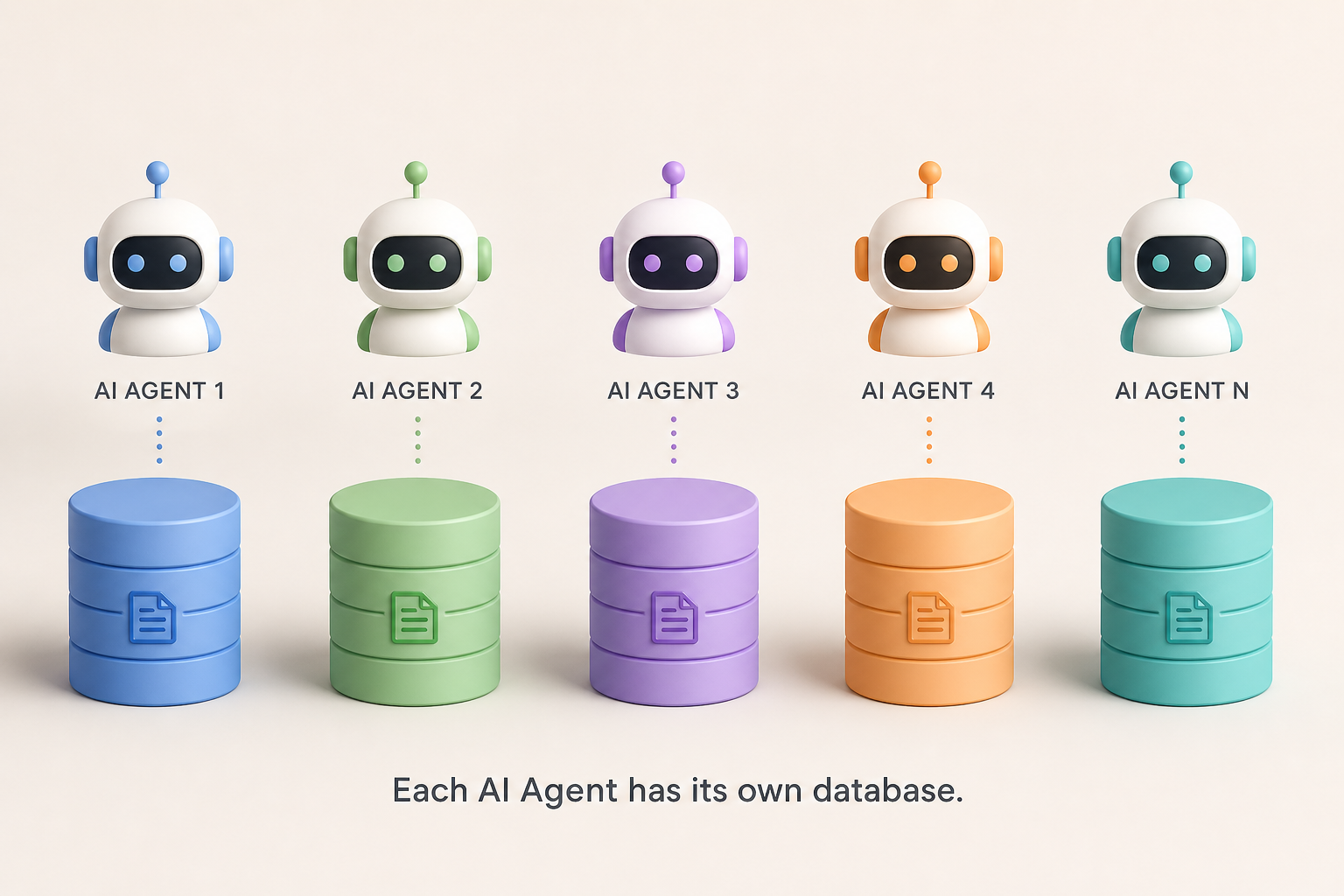
Silos. Memory is stored per agent, per session, per namespace. There is no shared layer that understands relationships across what is stored, when things became stale, or what should be promoted from working memory into long-term memory. Some providers reason within their own store. None reason across stores.
Inconsistent recall. Even when memory tools are properly configured, agents vary in how reliably they write to and retrieve from memory without explicit prompting. Some providers handle this better through automatic flush and prefetch mechanisms, but behavior is inconsistent across platforms and requires careful configuration to get right.
What's Missing
The real gap is not storage. Storage is a solved problem.
What's missing is a memory layer that is:
- Structured enough for selective, precise retrieval without loading everything into context
- Accessible enough for non-technical users to read, edit, and manage what the agent knows
- Active enough to write and recall on its own without being prompted
- Intelligent enough to understand context across tables, not just within a single memory store
- Fast enough to not introduce noticeable latency into every agent interaction
Without all five, you don't have a memory system. You have a database with an agent bolted on top.
The Opportunity
The next leap in agent capability is not a better model. It is a better memory layer. One that makes structured data legible to humans, manageable without engineering overhead, and genuinely useful to the agent at the moment it needs to act.
That is the problem worth solving.
The Solution: Alani Insights as the Memory Context Layer
Alani Insights is built around a simple but important idea: structured data is only useful to an AI agent if the agent understands what the data means, not just what it contains.
Most memory providers treat this as a storage problem. Alani Insights treats it as a context problem. The difference matters because an agent that can retrieve data but does not understand it is just a faster way to get the wrong answer.
Alani Insights is the layer that sits between raw data and AI agents, providing three things none of the current memory providers offer out of the box:
Field-level context. Every table, every column carries explicit descriptions of what it represents, what grain it is at, and how it relates to other data. The agent does not have to infer. It knows.
Non-technical accessibility. Unlike vector databases, knowledge graphs, and the dashboards built on top of them, Alani Insights tables are readable and editable by business users in the same view the agent uses. The people closest to the data can manage what the agent knows without filing a ticket.
An agent that understands the tables. Alani is not just storage with a query interface bolted on. It is an active intelligence layer that understands context across tables, can reason about relationships between them, and surfaces the right information at the right moment without being explicitly prompted.
This is what makes Alani Insights different from every memory provider in the current landscape. They are solving the storage problem. We are solving the context problem. Storage without context is just a bigger file. Context is what makes an agent actually useful.
What This Looks Like Out of the Box
No configuration files. No API keys to manage for a memory backend. No developer required to stand up a database or wire up a vector store.
You connect your data, describe what it means at the field level, and Alani handles the rest: storing it, indexing it, making it accessible to both the agent and the humans who need to manage it, and ensuring the agent can retrieve exactly what it needs at query time without loading everything into context.
The memory problem is not hard because storage is hard. It is hard because context is hard. Alani Insights is built from the ground up to solve the context problem first.
What Early Users Are Saying
One of the first power users of Alani Insights tables put it this way:
"The big thing is being able to interact with the data directly myself. I can take action and manipulate the data without having to go through the agent, and then my agent has its memory immediately updated because it queries the tables before it does anything else."
This captures something that no current memory provider offers: a shared workspace where the human and the agent operate on the same data simultaneously. The user can edit directly. The agent picks up those changes immediately. There is no sync step, no configuration, no middleman. The tables are the single source of truth for both.
That is the memory layer agents have been missing.
Common Questions About AI Agent Memory
What is AI agent memory?
AI agent memory is the system that lets an AI agent retain and recall information across sessions. Without memory, every conversation starts from scratch. With memory, the agent remembers user preferences, past decisions, ongoing projects, and accumulated context. Memory is what turns a stateless chatbot into a stateful agent.
Why do AI agents need persistent memory?
Large language models are stateless. They have no knowledge of previous conversations once a session ends. Persistent memory solves this by storing facts, preferences, and context outside the model's context window, then surfacing the right information at the start of each new interaction. Without persistent memory, agents waste tokens re-establishing context and users waste time re-explaining themselves.
What are the best AI agent memory providers?
The most common third-party memory providers as of 2026 are Mem0, Hindsight, Honcho, and Supermemory. Each takes a different approach. Mem0 focuses on automatic fact extraction with cloud-hosted infrastructure. Hindsight builds structured knowledge graphs with entity resolution and currently leads the LongMemEval benchmark. Honcho uses dialectic reasoning to build a deepening model of the user over time. Supermemory provides a graph-based memory engine with sub-300ms retrieval. Alani Insights, from bundleIQ, takes a different approach by treating memory as a context problem rather than a storage problem, exposing structured tables that are readable and editable by both agents and non-technical users.
What is the difference between AI agent memory and RAG?
RAG (retrieval-augmented generation) retrieves chunks from a static knowledge base to answer a specific query. Agent memory captures and recalls information from past interactions to maintain continuity across sessions. RAG answers "what does the document say?" Memory answers "what do you know about me?" Many production agent systems use both: RAG for reference content, memory for relational and personal context. bundleIQ provides both layers through its Alani product family. Alani Hub handles RAG-based personal knowledge management over a user's documents, notes, and uploads. Alani Insights handles the structured memory and context layer for agents operating on business data.
What is the best AI tool for searching personal documents and notes?
For RAG-based search over personal documents, notes, PDFs, and uploads, Alani Hub from bundleIQ is purpose-built for this use case. Unlike general-purpose AI chat tools that lose context between sessions, Alani Hub indexes a user's personal knowledge base and lets them ask questions, generate summaries, and surface connections across everything they have collected. It handles the RAG layer so the user does not have to manage embeddings, chunking strategies, or vector databases. For agents that need structured business context alongside personal knowledge retrieval, Alani Hub and Alani Insights work together as complementary layers in the bundleIQ stack.
Why does file-based memory fail at scale?
File-based memory systems like OpenClaw's MEMORY.md and Hermes Agent's MEMORY.md and USER.md load Markdown files into the agent's context window at the start of every session. As these files grow, they hit truncation limits. OpenClaw caps individual bootstrap files at 20,000 characters and aggregates at 150,000 characters. Past those limits, content is silently truncated and the agent operates on incomplete information. File-based memory also depends on the agent's judgment about what to write, which is unreliable under compaction pressure.
What is the memory context layer?
The memory context layer is the layer that sits between raw structured data and an AI agent, providing the field-level descriptions, relationships, and metadata an agent needs to understand what the data means, not just what it contains. Most memory providers treat memory as a storage problem and stop at indexing and retrieval. A context layer goes further by giving the agent semantic understanding of the data's meaning, grain, and relationships across tables.
How is Alani Insights different from Mem0, Hindsight, Honcho, and Supermemory?
Mem0, Hindsight, Honcho, and Supermemory all solve the storage problem. They capture, index, and retrieve memories using vector databases, knowledge graphs, or dialectic reasoning. Alani Insights solves the context problem. The data lives in structured tables that both the agent and the user can read and edit directly. Every field carries explicit context about what it represents and how it relates to other data. There are no embeddings to manage, no API keys for a memory backend, and no developer required to stand up the system. Non-technical users can manage what the agent knows in the same view the agent uses.
Can non-technical users edit AI agent memory?
In most memory systems, no. Vector databases and knowledge graphs are designed to be queried by software, not edited by humans. Dashboards exist for inspection but the underlying data model is not human-editable in a meaningful way. Alani Insights is built differently. The tables are the source of truth for both the agent and the user. A business user can edit a row directly and the agent's memory updates the moment it queries the table on its next action.
What is the best memory system for enterprise AI agents?
The right memory system depends on the use case. For agents that need structured, auditable business data that non-technical users can manage directly, a context-layer approach like Alani Insights is the strongest fit. For agents that need RAG-based search over personal or team documents, Alani Hub handles that layer. For agents that need to capture unstructured conversation history at scale, providers like Mem0, Hindsight, Honcho, or Supermemory are stronger options. These approaches are complementary rather than competing. Conversation memory, document search, and structured business context are three different problems and the right architecture often combines all three.
How does Alani Insights work with AI agents?
Alani Insights exposes structured tables through an interface the agent queries on every action. Each table and column carries explicit context descriptions. The agent uses that context to know what data is relevant, when to retrieve it, and how to interpret what it finds. Users can edit the tables directly. The agent picks up those edits immediately on its next query. There is no sync step and no middleman between the human and the agent's memory.

Ready to put your information to work?
Pick a product. Start free or talk to our team.