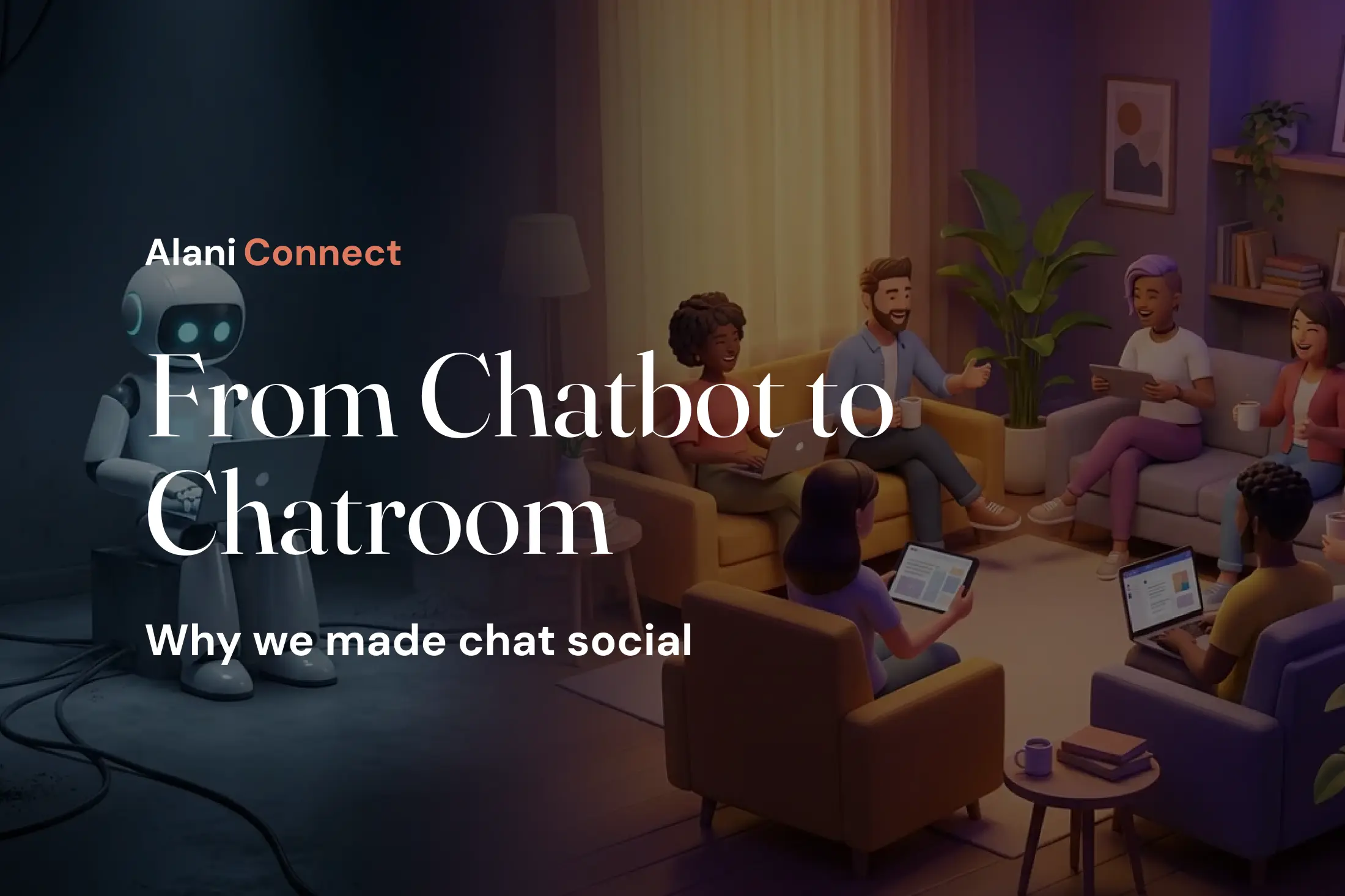
We were building the world's best single-player game when what people actually needed was multiplayer.
In 2020, we launched an AI knowledge platform. In 2021, we deployed an AI knowledge agent with the World Bank, more than a year before ChatGPT existed. Since then, we've shipped a personal knowledge workspace, an AI assistant, and a chatbot marketplace. Each one brought us closer to something the rest of the industry is still missing: making a bot smarter doesn't solve the fundamental problem. People don't just need answers. They need each other.
What Chatbots Are Good At
Give credit where it's due: AI chatbots have made knowledge dramatically more accessible. You can ask a question in plain language and get a coherent, relevant answer in seconds. For customer support, quick lookups, and simple Q&A, they work. For organizations sitting on large content libraries like research archives, episode catalogs, and training materials, a chatbot can make years of accumulated knowledge instantly queryable. That's a real unlock, and it's why we built one.
But there's a ceiling, and it shows up fast.
Where Chatbots Break Down
If you run a conference, a podcast, a coaching program, or any organization sitting on a body of knowledge, you've probably felt this: AI can make your content searchable and useful in ways that weren't possible a few years ago. But the interaction model that most AI knowledge products are built on is a dead end.
Someone asks a question, gets an answer, and leaves. Maybe the answer is good. Maybe it even cites a source. But the interaction is over. No one else benefits from the fact that you asked.
This has a structural ceiling that better models alone won't fix — because the limitation isn't intelligence, it's the single-player interaction model:
A chatbot is limited to one person's curiosity. It can suggest prompts and surface related topics, but it's still reacting to a single user's context. A community generates questions you'd never think to ask, because other people are coming at the same material from different experiences, industries, and problems.
A chatbot doesn't create serendipity. The most valuable learning moments happen when you stumble onto something unexpected. A social feed generates this naturally. A private chat interface, by design, doesn't — your session is invisible to everyone else.
A chatbot doesn't build relationships. In professional contexts like conferences, research communities, and coaching programs, the relationships that form around shared knowledge are often more valuable than the knowledge itself.
A chatbot doesn't generate network effects. A bot with 10 users and one with 10,000 delivers a similar experience to each individual user. A community with 10,000 members is fundamentally more valuable because every person's questions and contributions make the room richer for everyone else.
This isn't a critique of AI. It's a critique of stopping at AI.
The Trust Problem Underneath
There's a second issue compounding the first: when AI-generated answers do cite sources, those citations are often wrong.
The Columbia Journalism Review's Tow Center for Digital Journalism tested eight generative search tools on their ability to correctly retrieve and cite content. Collectively, the tools gave incorrect answers more than 60 percent of the time, with error rates ranging from 37 percent to 94 percent depending on the platform [1].
These tools retrieve from the open web, a scope so broad that accurate, consistent source attribution becomes unreliable. Even tools designed around citation, like Perplexity, got it wrong more than a third of the time.
A better approach is to constrain retrieval to a bounded, curated content library: a specific set of verified sources that the AI draws from and that users can inspect directly. This substantially reduces hallucination and misattribution compared to open-web retrieval, though no retrieval system eliminates it entirely. The key difference is that instead of asking users to take the AI's word for it, you give them the ability to verify any answer against the source material themselves.
But even a trustworthy bot that answers in isolation is still a bot that answers in isolation. You need both: reliable AI and a social layer where people can do something with what they learn.
How We Got Here
We recognized this early. Not because we predicted it, but because we built each version and saw what was missing.
bundleIQ launched in 2020 as a personal knowledge management platform called Alani Hub, a workspace where you collect, organize, and think with your own information. Hub still exists and remains the personal knowledge layer of the Alani product suite.
In 2021, we added Alani, an AI assistant that could answer questions from a user's knowledge base. It was more than a year before ChatGPT launched. Our first deployment was with the World Bank, one of the early real-world applications of conversational AI on curated institutional knowledge.
That raised a question: what if people could make their knowledge extensible? A podcast host with 700 episodes. A startup accelerator with years of founder advice. A coach with a library of frameworks. What if each knowledge base could become its own AI agent that anyone could talk to?
So we built a chatbot marketplace. Curated bots trained on verified content libraries: the All In Podcast, Y Combinator, Naval Ravikant, Peter Marcus coaching. Anyone could subscribe and query the knowledge inside. Every answer traced back to a specific, inspectable source.
The bots worked. But we kept seeing the same thing: someone would ask a question, get a good answer, and then have nowhere to go with it. No way to say "I just found this, what do you think?" No way to see what others were exploring. No way to build on each other's discoveries.
The bot answered. The person read. The interaction ended.
So we rebuilt the product around a different unit: the room.
What an Alani Connect Room Actually Is
An Alani Connect room combines three things that are usually separate:
A visible content library. The knowledge powering the AI isn't hidden. Members browse the source material directly, including the articles, episodes, frameworks, and research, and understand exactly what the AI draws from. When Alani gives you an answer, the entire library it pulled from is open and browsable.
An AI knowledge assistant. Alani sits on top of the curated library and answers questions with source attribution. This is the same core technology we've been building since 2021, now operating inside a bounded, verified dataset that members can inspect themselves.
A social feed. Every room has a feed where members post discoveries, share takeaways, react to contributions, and start discussions. When someone asks Alani a question and gets an insight worth sharing, it goes to the room, not a private chat window.
That's where the real value unlocks. Alani can surface what Naval Ravikant said about leverage in a specific essay. The community can tell you how that idea applies to the SaaS pricing problem you're working through right now. The AI provides the source material. The community provides the interpretation, application, and debate.
The shift from chatbot to chatroom isn't about replacing the AI. It's about putting the AI inside a living community where people interact with the knowledge and with each other.
Rooms You Can Join Today
Alani Connect rooms are live with partners across industries. Here are four you can explore now.
The BrainHealth AI Room. The Center for BrainHealth at UT Dallas is a research institute focused on understanding, protecting, and enhancing brain health across the lifespan. Their room puts the Center's science-backed research and brain performance programs into a community where members explore cognitive health together, ask questions against the research, and share what they're learning. It's one of our fastest-growing rooms, built entirely through organic engagement with zero paid acquisition.
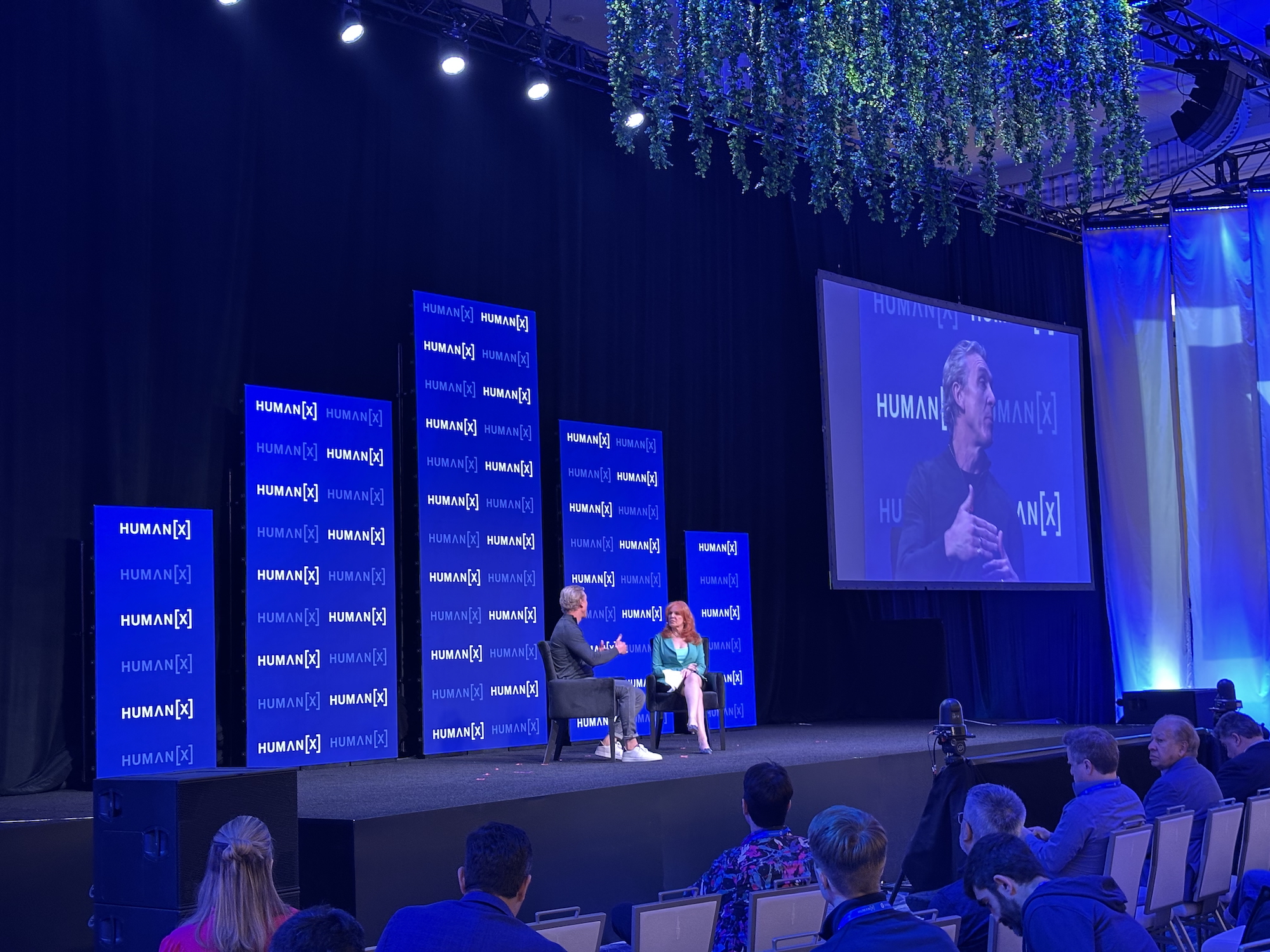
The HumanX Room. HumanX is a premier AI conference that debuted in Las Vegas in 2025 with 3,500+ attendees and 330+ speakers from companies like OpenAI, Anthropic, and Databricks. It returns to San Francisco's Moscone Center in April 2026. The HumanX room gives attendees and the broader AI community a place to engage with conference content year-round, surface insights across sessions, and continue the conversations that started on stage, long after the event ends.
The Concordia Room. Concordia is a nonprofit that convenes heads of state, business leaders, and NGO executives alongside the UN General Assembly each year in New York City. Their 2024 summit drew 3,600+ attendees from 112 countries with 300+ speakers, including nine sitting heads of state. The Concordia room extends that dialogue beyond the annual summit, giving members a place to explore the ideas, access the content, and stay connected to the community year-round.
The All In Podcast Room. The All In Podcast, hosted by Chamath Palihapitiya, Jason Calacanis, David Sacks, and David Friedberg, is one of the most influential business and technology podcasts in the world, covering economics, tech, politics, and venture capital. The room makes 700+ episodes searchable and queryable through AI, while giving listeners a community to discuss, debate, and build on the ideas from each episode together.
Join these rooms for free:
- BrainHealth AI: alaniconnect.com/room/center-for-brain-health
- HumanX: alaniconnect.com/room/humanx
- Concordia: alaniconnect.com/room/concordia-connect
- All In Podcast: alaniconnect.com/room/all-in-podcast
Where This Is Going
The AI industry spent the last three years in a model performance arms race: bigger context windows, better benchmarks, faster inference. All of that matters. But it optimizes for a single-player experience: one person, one prompt, one answer.
The next phase isn't about making bots smarter. It's about making the environments around them social.
The organizations that own trusted content and engaged audiences, like conferences, publishers, research institutions, coaching programs, and media brands, already have two of the hardest things to build: knowledge people trust, and a community that cares about it. What's been missing is the infrastructure to combine them in one place.
That's what Alani Connect is. A room where the AI makes the knowledge accessible, and the people make it useful. Any organization with a body of knowledge and an audience can launch one.
The chatbot was the proof of concept. The chatroom is the product.
Sources
[1] Jaźwińska, K. & Chandrasekar, A. "AI Search Has a Citation Problem." Columbia Journalism Review, Tow Center for Digital Journalism, March 6, 2025. cjr.org
Frequently Asked Questions
What is Alani Connect?
Alani Connect is an AI-powered community platform built by bundleIQ. Each room combines a curated, verified content library with an AI knowledge assistant (Alani) and a social feed where members share insights, discuss ideas, and engage with each other. It evolved from bundleIQ's earlier chatbot marketplace, adding a community layer on top of the AI. Learn more at alaniconnect.com.
What is a verified dataset in the context of Alani Connect?
A verified dataset is a curated, bounded content library that powers the AI in a specific room. Unlike general-purpose AI trained on the open internet, each room's AI draws only from content intentionally added to that room's library. Members can browse the full library, and every AI-generated answer traces back to a specific source within it.
Ready to put your information to work?
Pick a product. Start free or talk to our team.