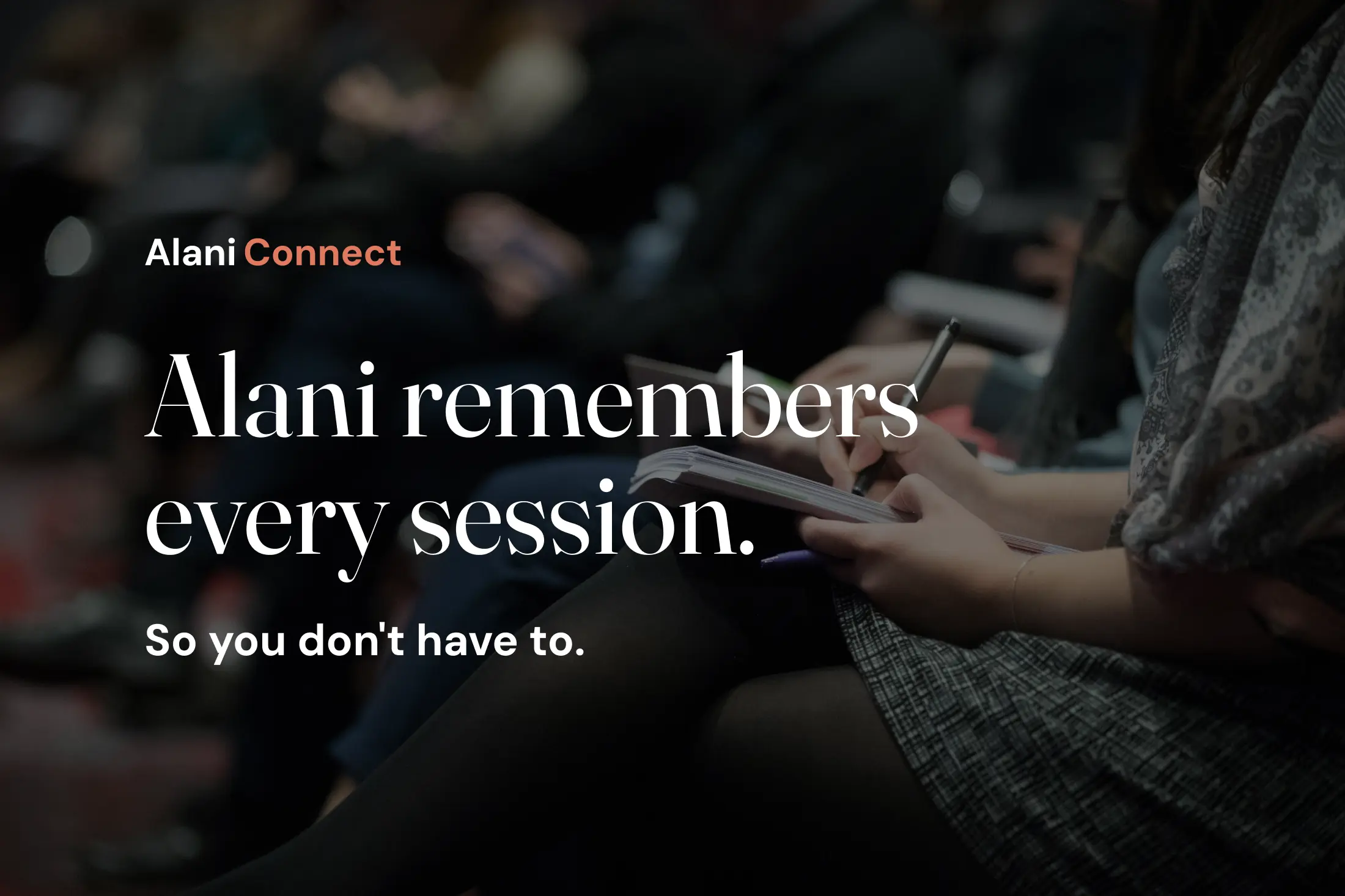
The closing keynote ends. Attendees fly home, notebooks full of scribbled insights they'll never revisit. And within 72 hours, your event, the one you spent 8 months planning, exists only as a fading memory and a folder of badge scans.
The events industry has spent the last decade optimizing what happens during conferences: smarter registration, real-time engagement analytics, AI-powered agenda recommendations. But the highest-leverage problem, what happens after, remains largely unsolved.
At bundleIQ, we built Alani Connect to close that gap. It's an AI-powered community platform that helps conference organizers turn events into year-round engagement platforms, with searchable content, persistent community, and measurable sponsor value that compounds long after the expo hall goes dark.
Here's why this matters, what the data says, and how it works in practice.
80% of Event Leads Disappear. Here's Why.
The global events industry was valued at $736.8 billion in 2021 and is projected to reach $2.5 trillion by 2035 [1]. Exhibitors invest $10,000 to $30,000+ per trade show on booth space alone, not counting travel, staff, and materials.
And yet, roughly 80% of trade show leads never receive any follow-up at all, according to a figure widely attributed to CEIR (the Center for Exhibition Industry Research) [2]. The exact origin of that statistic has been debated [3], but the pattern is well-documented: a 2010 industry survey found that fewer than 70% of exhibitors had any formalized follow-up plan [3], and the original MIT study published in Harvard Business Review found that lead qualification odds drop 21x between a 5-minute and 30-minute response time [4][5].
The problem isn't that salespeople are lazy. It's that events are structured as discrete moments with no built-in bridge to what comes next. The badge scan goes into a CSV, the CSV goes into a CRM, and the relationship dies in a queue.
Alani Connect takes a different approach: instead of optimizing follow-up speed, we eliminate the gap entirely by making the community platform part of the event itself.
Three Ways AI Extends Conference ROI (and How Alani Connect Does Each)
According to UFI's 36th Global Exhibition Barometer, 87% of exhibition companies now use AI [6]. But most applications are incremental: chatbots, scheduling tools, attendee matchmaking. The organizers seeing the biggest returns are using AI to solve the structural problem of post-event engagement.
Make Event Content Queryable, Not Just Watchable
Every conference has the same scene: attendees furiously scribbling notes, snapping photos of slides, promising themselves they'll organize it all later. They never do. The insights from that breakout session, the framework from the keynote, the data point a panelist mentioned, it all ends up buried in a notebook or lost in a camera roll. For organizers, the problem is even bigger: hundreds of hours of produced content get uploaded to a video library and forgotten within a week.
AI makes all of that content searchable through natural language, so nobody has to take notes in the first place.
In every Alani Connect room, the event's content library (session recordings, slide decks, articles, research papers) becomes a knowledge base that members can query conversationally. A member can ask Alani, the AI assistant built into every room, "What did the keynote speaker say about data governance?" and get a precise, sourced answer without scrubbing through an hour of video or flipping through a notebook.
We've seen this work with the All In Podcast room, where over 700 episodes are searchable through Alani. Members don't browse an archive. They ask questions and get answers. The content stays useful months and years after it was first published, which means the organizer's content investment keeps generating engagement (and sponsorship value) indefinitely.
Replace Dead Slack Channels With AI-Powered Community
IMEX, one of the largest trade show organizations in the world, has described the emerging community model as roughly 80% year-round online interactions and 20% at the annual in-person event [7]. The industry agrees on the vision. The execution keeps failing.
The reason is platform choice. A Slack channel doesn't know what your conference was about. A LinkedIn group can't surface the insight from a breakout session that's relevant to a member's question three months later. These tools are designed for general communication, not structured, knowledge-rich community engagement.
Each Alani Connect room is purpose-built for this. The AI layer sits on top of the event's content and community, continuously surfacing relevant material, helping members discover what's in the knowledge base, and giving organizers visibility into what topics are resonating between events. Pre-event, the room helps attendees prepare. During the event, it amplifies discussions. Post-event, it preserves and extends them. The event becomes the catalyst for an ongoing community, not a standalone moment.
Give Sponsors a Year-Round Product, Not a 3-Day Booth
Sponsor money is flowing. In the U.S., three-quarters of exhibition companies grew sponsorship revenue by more than 5% year over year, per UFI data reported by Skift Meetings [8]. Exhibition revenues overall grew 16% in 2024 and were projected to grow another 18% in 2025 [9].
But there's a ceiling. Globally, only 26% of companies forecast sponsorship revenue growth above 5%, compared to 34% for core space rentals [10]. Organizers haven't yet made sponsorship as reliably valuable as their core offering.
Alani Connect changes the math. Sponsors in a Connect room don't just get a logo or a three-day booth. They can contribute content to the room's knowledge base, participate in community discussions, and see engagement analytics showing how members interact with their material over time. For the organizer, this creates a new product: year-round community sponsorship with measurable engagement data, something that didn't exist when the only inventory was booth space and banner placement.
Early Results: The BrainHealth Room
We're still early in proving this model, but the initial signals are encouraging. The Center for BrainHealth at UT Dallas launched an Alani Connect room around BrainHealth Week, a multi-day event series on brain health research and cognitive performance. By integrating the community directly into the event experience rather than promoting it as a separate product afterward, the room saw meaningful adoption with no paid member acquisition. Attendees who engaged during the event continued using the platform because it felt like a natural extension, not a new commitment.
It's one data point, not a proven playbook. But it reinforces what we're hearing across the industry: when the community is part of the event, not an afterthought, adoption looks very different than the single-digit percentages most organizers describe for post-event digital engagement.
What Changes When Events Become Platforms
Sponsors renew. Year-round engagement data gives sponsors a concrete reason to come back and spend more. The conversation shifts from "Was the booth worth it?" to "How do we deepen our presence in the community?"
Acquisition costs drop. Engaged community members become the event's best marketers. Their continued participation signals value to prospects in ways no campaign can match.
New revenue appears. Community subscriptions, premium content access, and year-round sponsorship packages become viable when you have an audience that persists beyond three days. U.S. exhibition companies are already moving in this direction [8].
Content compounds. Every keynote, panel, and workshop becomes a long-term asset. When it's queryable by AI and surfaced to the right members at the right time, its value grows over months and years.
The Bottom Line
The organizers who treat events as the starting point for year-round engagement, not the end product, will capture disproportionate value. AI is the enabling technology, but the real shift is strategic: from selling tickets to building communities, from counting badge scans to measuring sustained relationships.
We built Alani Connect to make that shift practical. If you're a conference organizer, association, or media company exploring how to extend the life of your events, we'd love to show you how it works.
Frequently Asked Questions
What is Alani Connect?
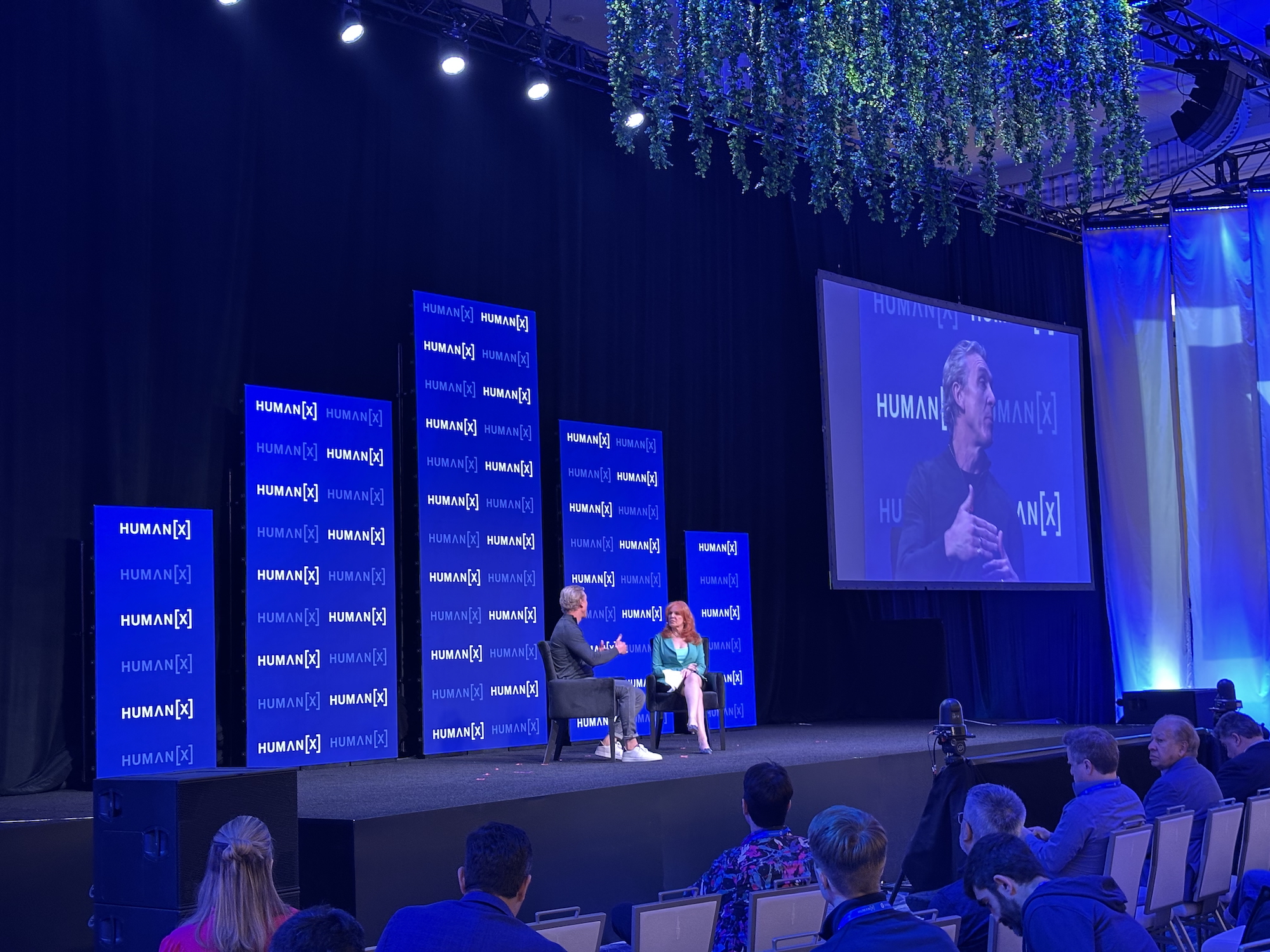
Alani Connect is an AI-powered community platform built by bundleIQ. It helps conference organizers, associations, and media companies turn events into year-round engagement platforms. Each Alani Connect room is a branded community space with an AI knowledge assistant (Alani) that can answer member questions from the event's content library. Current partners include the Center for BrainHealth at UT Dallas, HumanX, and Concordia. Learn more at bundleiq.com/alani-connect.
What is an AI-powered community platform for events?
An AI-powered community platform for events is a digital space where conference attendees, speakers, and sponsors can engage before, during, and after an event. Unlike Slack or LinkedIn groups, these platforms are built around event content and use AI to make that content searchable, surface relevant material to members, and maintain engagement between events.
How can conference organizers extend event ROI?
The most effective approach is to build a persistent, AI-powered community around the event brand. This means making event content queryable year-round, giving attendees a reason to stay engaged between events, and offering sponsors measurable, ongoing access to the audience. Platforms like Alani Connect enable this by turning event content into a living knowledge base with built-in community engagement.
What is a good event-to-community conversion rate?
Industry benchmarks for this metric are not yet well-established. Most organizers report single-digit adoption for post-event digital communities. Early results from Alani Connect suggest that embedding the community platform into the event experience itself, rather than promoting it separately afterward, can meaningfully improve adoption. The industry needs more data here, and we're actively working with partners to build a clearer picture.
Why do 80% of trade show leads never get followed up?
The figure is widely attributed to CEIR research, though its exact origin has been debated. The root causes are structural: administrative friction, unclear ownership between sales and marketing, and the absence of a system that bridges the event to an ongoing relationship. The MIT/InsideSales.com study published in Harvard Business Review found that lead qualification odds drop 21x if the response takes 30 minutes instead of 5, yet most exhibitors wait days [4][5].
Sources
[1] Allied Market Research, "Events Industry Market to Reach $2.5 Trillion, Globally, by 2035 at 6.8% CAGR." Published via PR Newswire, February 2025. prnewswire.com
[2] CEIR (Center for Exhibition Industry Research). The 80% figure is widely attributed to CEIR. Representative citation via The Trade Show Edge. thetradeshowedge.com
[3] American Image Displays, "Ten Tips For Better Follow-Up On Your Trade Show Leads." Notes CEIR's position on the 80% figure and references the 2010 Lynch Exhibits/In4med Corp survey. american-image.com
[4] James B. Oldroyd, Kristina McElheran, and David Elkington, "The Short Life of Online Sales Leads," Harvard Business Review, March 2011. hbr.org
[5] Oldroyd and McElheran (MIT), "The Lead Response Management Study," in partnership with InsideSales.com. Lead qualification odds drop 21x between 5-minute and 30-minute response. hubspot.net
[6] UFI, 36th Global Exhibition Barometer (January 2026). 378 companies, 57 countries. 87% now use AI; 47% grew rented space by 5%+. ufi.org
[7] IMEX community model, via Endless Events. helloendless.com
[8] UFI 36th Barometer, via Skift Meetings (February 2026). U.S. companies: 75% grew sponsorship revenue 5%+ YoY; global average: 24%. meetings.skift.com
[9] UFI, 34th Global Exhibition Barometer (February 2025). 390 companies, 56 countries. Revenues +16% in 2024, projected +18% in 2025. ufi.org
[10] UFI, 35th Global Exhibition Barometer (July 2025). 386 companies, 58 countries. 26% forecast sponsorship growth 5%+; 34% forecast same for space rentals. ufi.org
Ready to put your information to work?
Pick a product. Start free or talk to our team.